Drone Roof Inspections — Safe, Fast and No Scaffolding
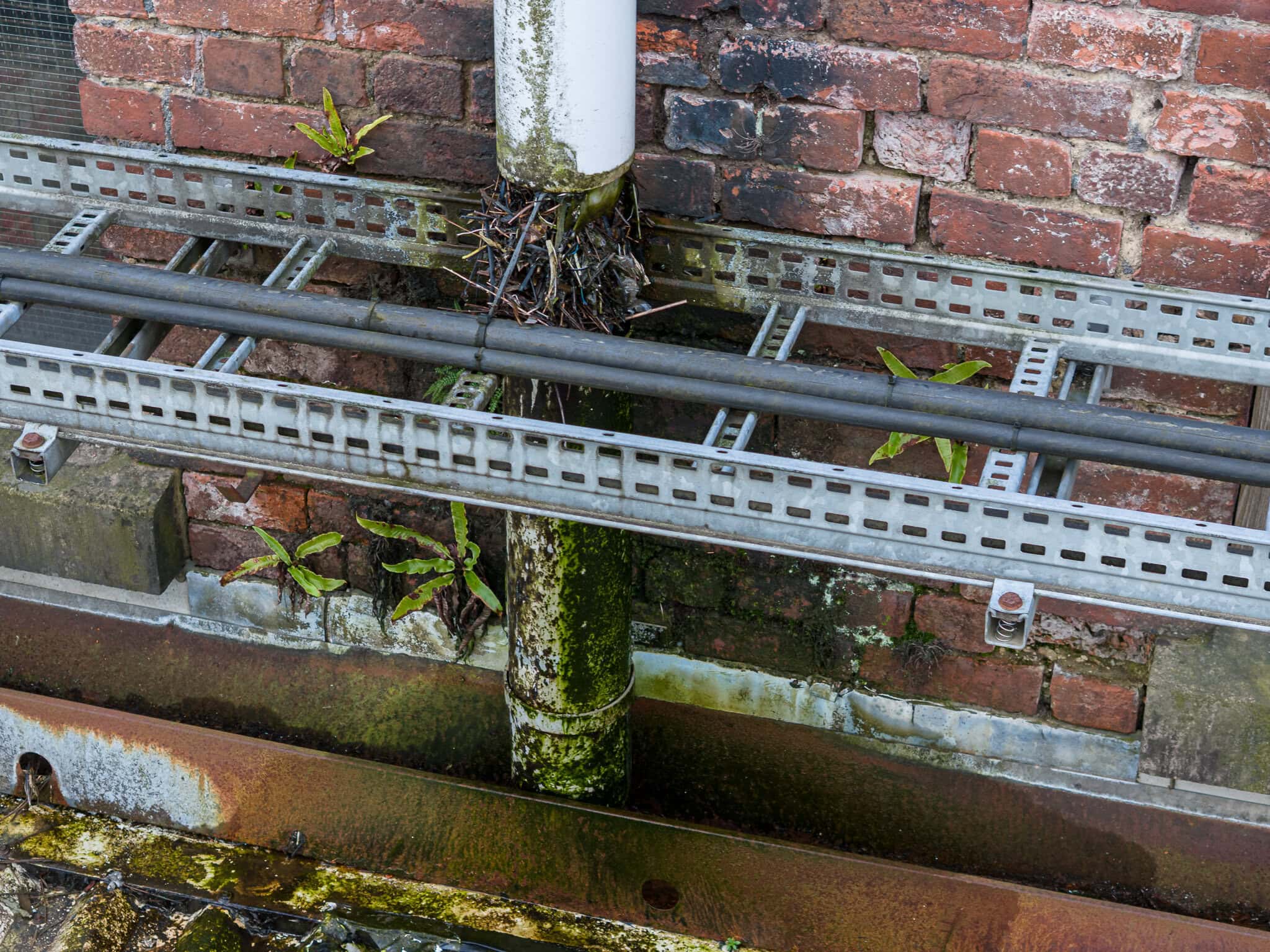
What Are Drone Roof Inspections?
Benefits of Drone Roof Inspections
No scaffolding or access equipment
eliminates hire costs, lead times, and working-at-height risk
Fast mobilisation
most single-property inspections completed in under an hour on site
High-resolution evidence
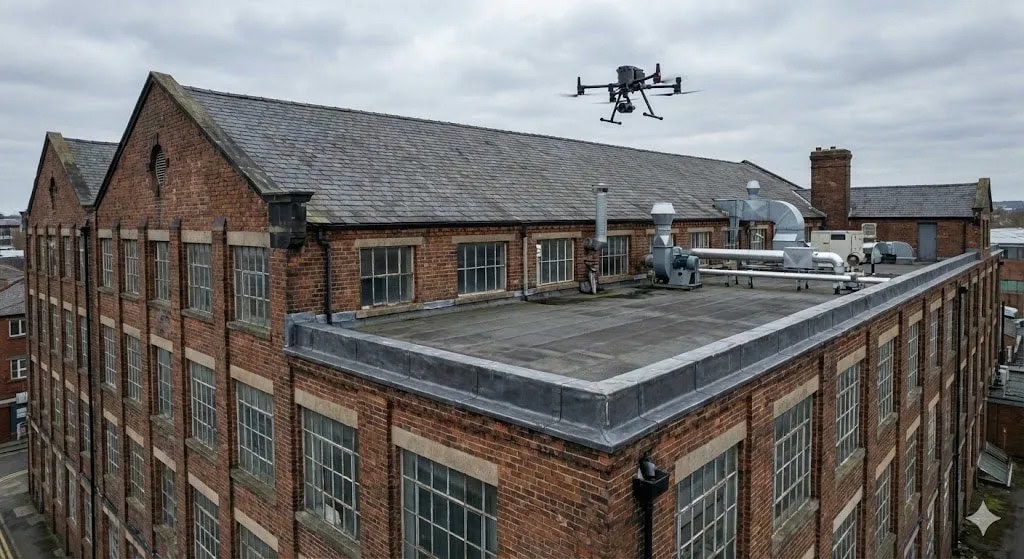
imagery captured at resolutions sufficient to identify cracked tiles, failed flashings, blocked gutters, and vegetation growth
Reduced disruption
no need to close areas beneath the roof or restrict building access during the inspection
Cost-effective first step
confirms whether further investigation or repair is needed before committing to scaffolding or contractor call-outs
Drone roof inspections are particularly useful where access is restricted — tall buildings, pitched roofs, listed properties, or sites where scaffolding would be disproportionately expensive relative to the inspection scope. For structural, roof, and industrial inspection work, see our drone inspection services.
Technology & Equipment
| DJI Commercial UAV Platforms | with high-resolution cameras (20MP+) and optical zoom for close-up defect identification |
|---|---|
| 4K Video Capability | for recording continuous footage of roof surfaces where video evidence is required |
| Live Streaming | available where clients or surveyors want to direct the pilot to specific areas in real time |
| GPS Flight Logging | all flights recorded with position, altitude, and timestamp data for audit and compliance |
Applications & Use Cases
- Pre-purchase inspections — assessing roof condition before buying a residential or commercial property
- Insurance claims — providing photographic evidence of storm damage, water ingress, or structural deterioration
- Planned maintenance — identifying deterioration early to schedule repairs before failure
- Landlord and property management — routine condition checks across portfolios without individual roof access
- Listed and heritage buildings — inspecting roofs where physical access would risk damage to the structure
- Commercial roofs — flat and pitched roofs on warehouses, offices, schools, and retail units where scaffolding costs would be prohibitive
Project Evidence
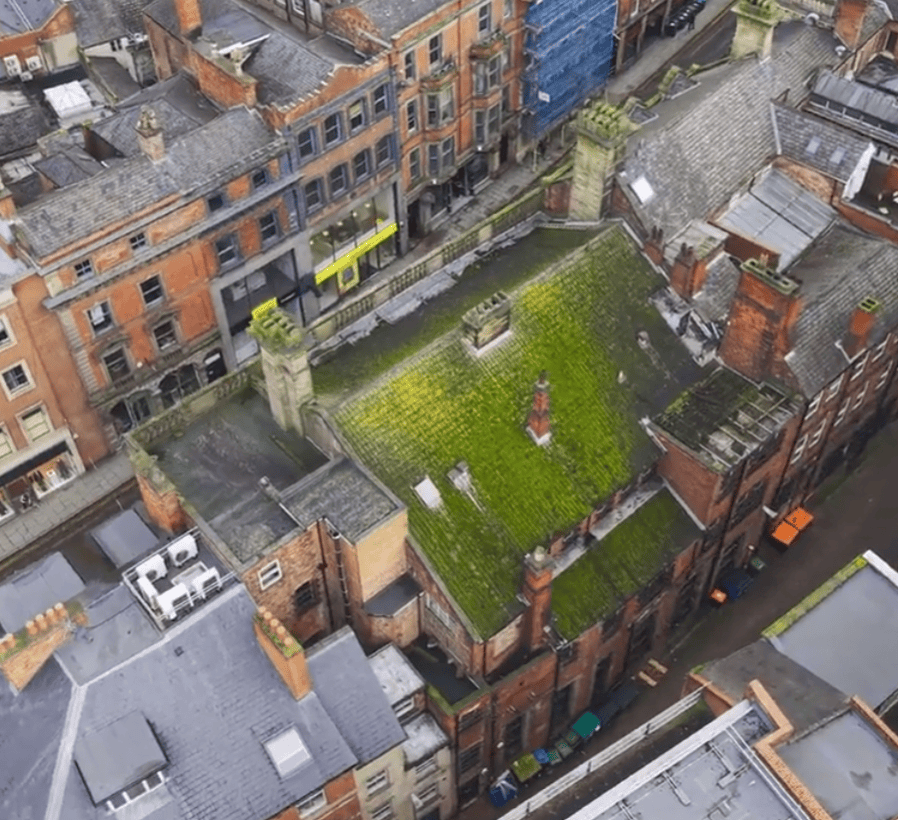
6 Victoria Street, Nottingham
Client: An architectural practice acting for a property investment company | Sector: Heritage, Commercial
Context: Architects needed a detailed roof condition assessment of a heritage building in the city centre to inform a cost-effective repair package. The building’s height and city centre location made scaffold access expensive and disruptive. They needed high-resolution imagery of every roof surface to identify all defects — not just the obvious ones visible from ground level.
- High-resolution imagery of all roof surfaces, drainage paths, parapets and detailing
- Annotated condition report documenting vegetation growth, drainage deterioration and patch repair failures
- Video fly-over for the client team
- Full image set via secure file sharing
- Architects specified targeted repairs rather than blanket remediation — saving the client significant cost
- All defects documented before specification, not discovered during works
- Drone inspection completed without scaffolding, road closures or access equipment
Method: Enterprise drone inspection | HD imagery + 4K video | Annotated reporting
High quality images and fly over video of the roof... a great help in putting together a repair package in the most cost effective way."
- Project Manager CIOB, architectural practice
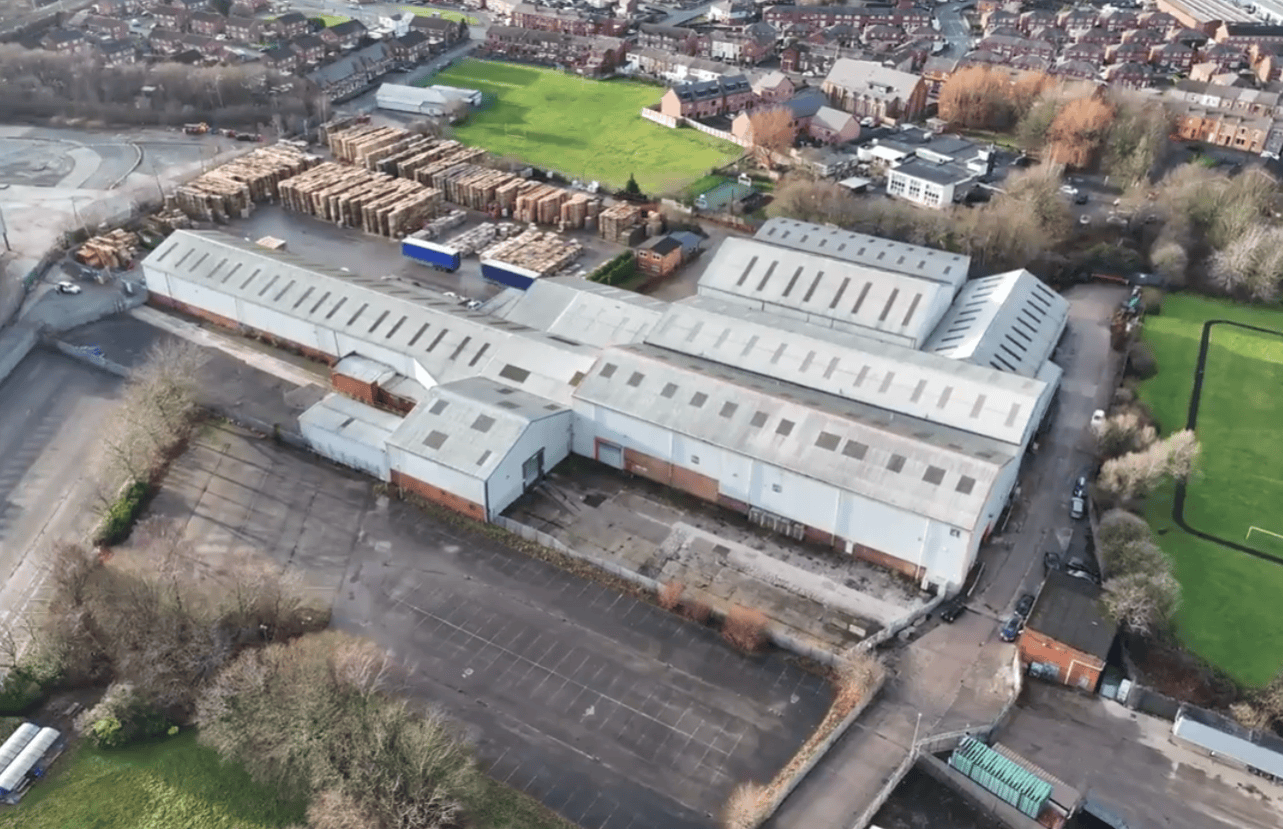
Dobson Park, East Midlands
Client: A national property consultancy | Sector: Commercial
Context: A property consultancy needed a drone roof inspection to assess condition of a commercial building and support a maintenance decision. Roof defects are invisible from ground level — without aerial evidence, decisions are based on incomplete information.
- High-resolution imagery of all roof surfaces
- Annotations highlighting areas of concern
- Condition report for client’s use in maintenance planning
- Quick turnaround from instruction to delivery
- Aerial evidence provided where ground-level assessment was insufficient
- Report supported the client’s maintenance decision-making process
Method: Drone roof inspection | HD imagery | Annotated condition report
"The drone inspection provided clear visual evidence that allowed us to confidently plan maintenance works."
— Senior Associate, Property consultancy
Our Drone Roof Inspections Process
Brief and scope
Airspace and permissions
On-site flight
Image review and annotation
Report production
Delivery
Pricing & Service Options
The cost of a drone roof inspection is determined by the property size, site location, the level of reporting required, and if specialised airspace permissions are needed
| Service | Typical Cost Range |
|---|---|
| Single residential roof inspection | £349–£450 |
| Commercial roof inspection | £349–£699+ |
| Multi-property or portfolio inspection | POA |
| Thermal roof inspection | £599–£1,199+ |
High-resolution aerial imagery and 4K video capture are included.
Inspection reports can be provided where required, either as a general visual condition report or as a
formal report prepared by an MRICS surveyor.
For a full pricing comparison, visit our pricing page.
Why Choose Sky Scan Surveys
Independent reports – no repair work
Sky Scan Surveys inspects roofs but does not carry out repair work, ensuring unbiased reporting.
Inspection or survey – the right brief
We recommend the correct service depending on whether the brief requires inspection or measured survey data.
CAA-authorised and fully insured
Flights conducted under CAA authorisation with £5m public liability and £1m professional indemnity insurance.
Reports typically within 48 hours
Inspection reports include annotated imagery, defect locations and condition notes.
No scaffolding or disruption
Drone inspections remove the need for scaffolding or cherry pickers for initial condition assessment.

Trusted By